
How AdaTrack compares to open-source tracking servers and hosted fleet platforms — on facts you can verify.
Most fleet tracking comparisons are written by whoever is selling. This one sticks to things you can check: what runs where, what the free tier really covers, what the paid tiers include, and what happens to your data if you leave. If another platform fits your operation better on those points, it will be obvious from the same facts.
Self-hosting without assembling the platform yourself
Open-source tracking servers give you control and expect you to supply the rest — integration, alerting logic, reporting and the time to maintain it. AdaTrack keeps the self-hosting but ships the surrounding platform, so the choice is not between control and completeness.
- Self-hostable, like an open-source tracking server
- Geofencing, alerting, workflows and reporting included, not assembled
- Commercial support available on the paid tiers
- Device decoders are user-editable scripts, so new hardware is a config change
- Same build in the cloud and on your own server
Included features, not priced modules
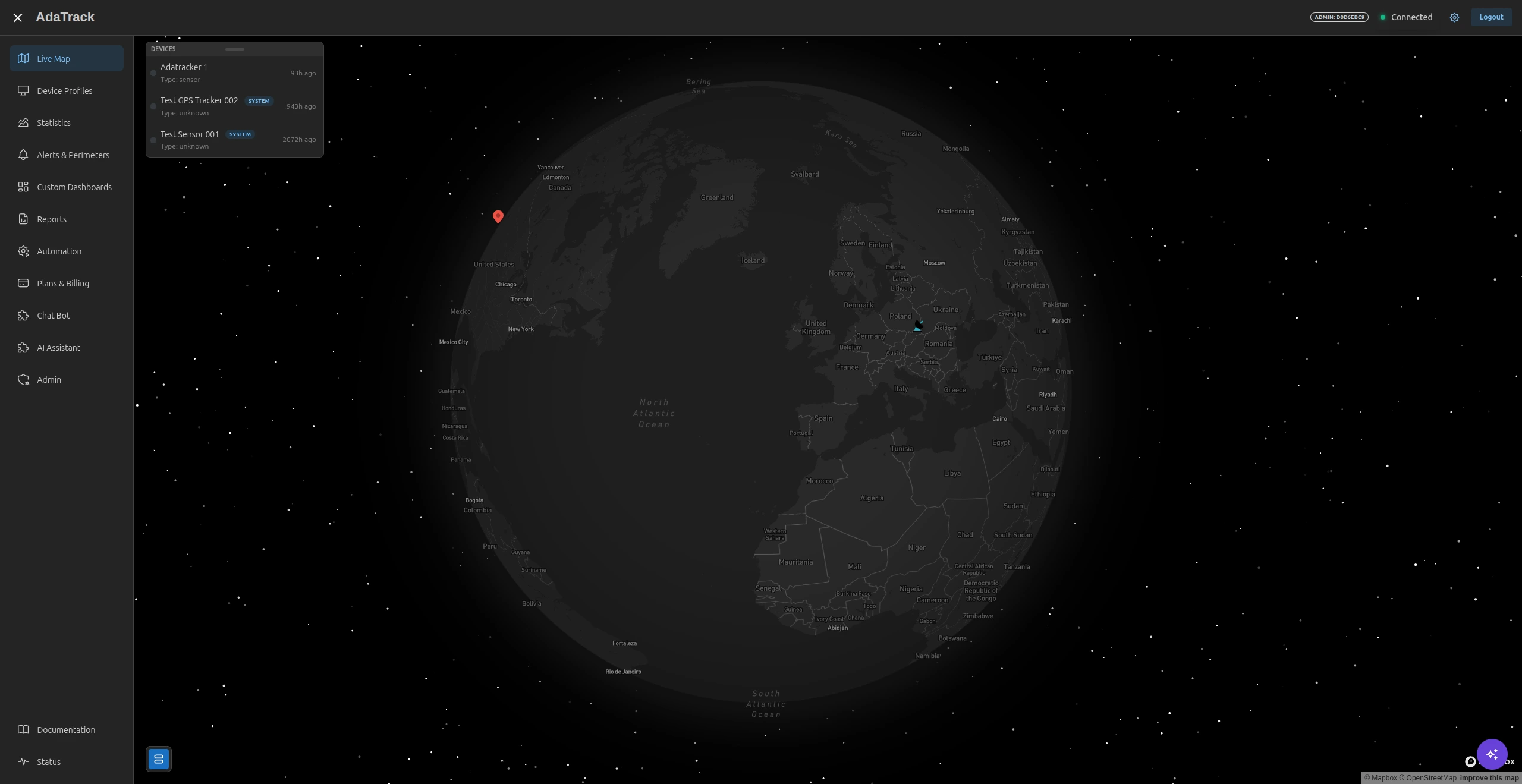
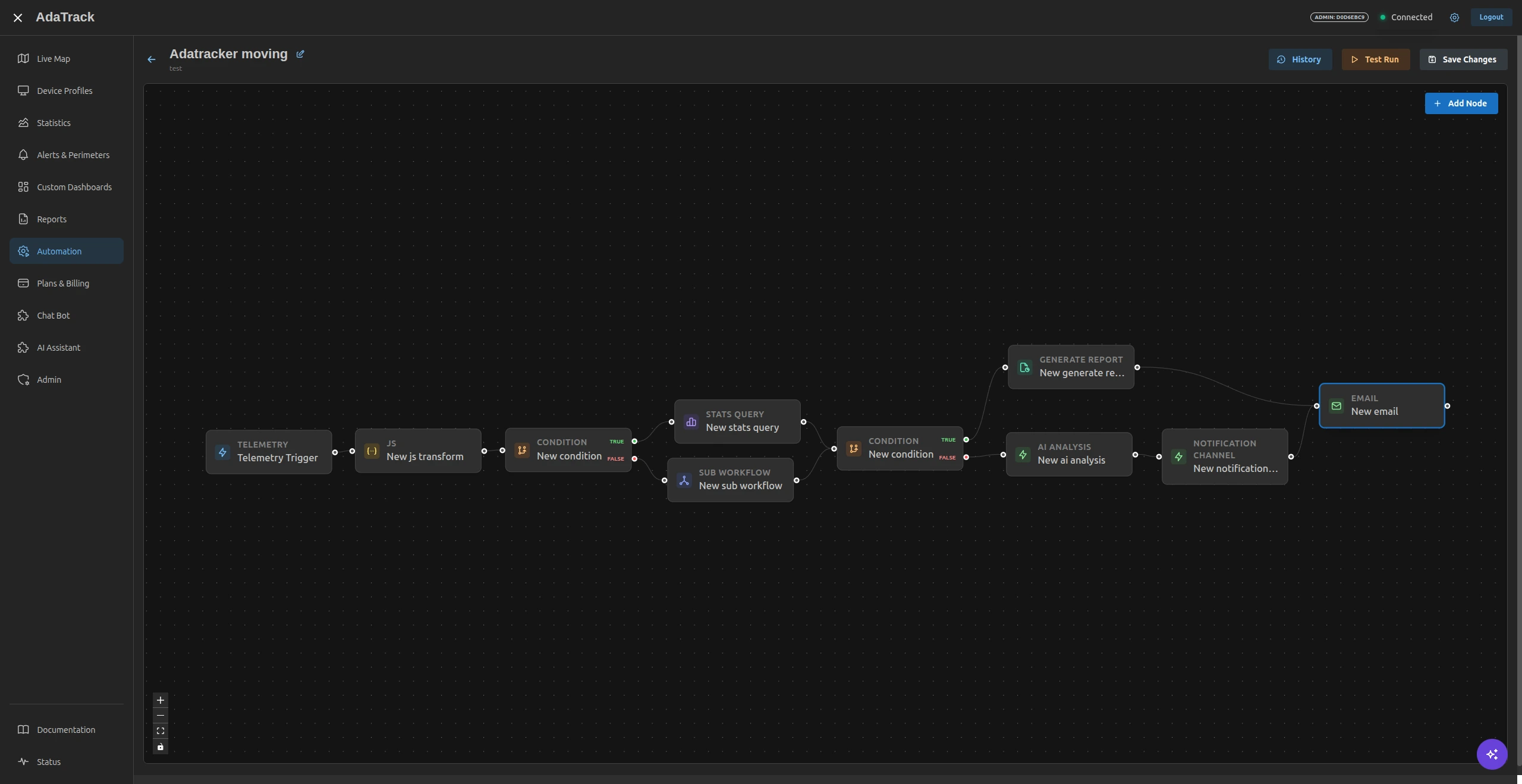
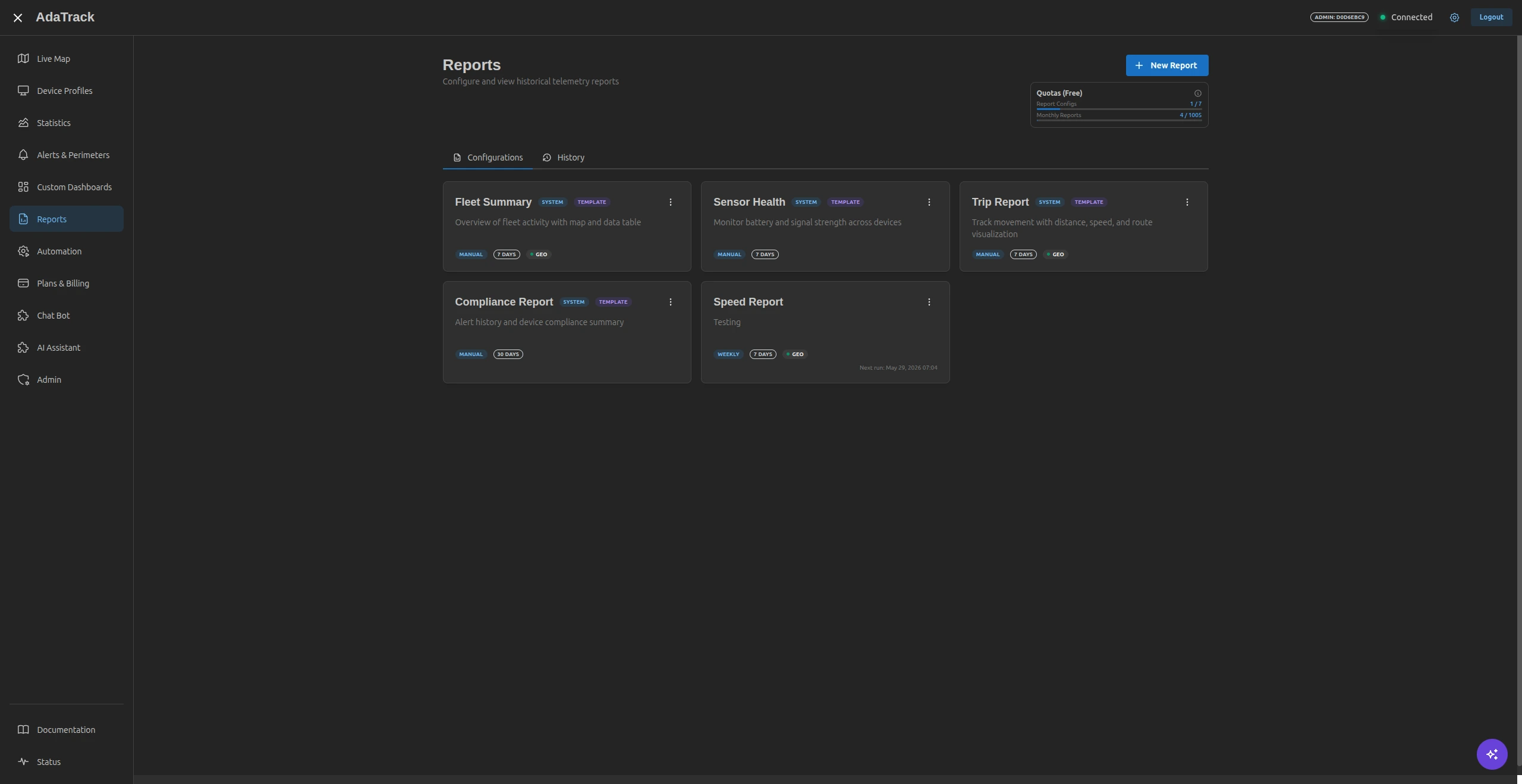
Feature grids are easy to game by counting modules, so it is worth checking what arrives in the box. Live tracking, geofencing, alert rules, trip records, automated workflows and scheduled reports are part of the platform rather than separately priced add-ons.
- Live WebGL map handling thousands of vehicles at once
- Geofences with enter and exit triggers
- Telemetry alert rules with multi-channel dispatch
- Automatic trip records with CSV, GPX and PDF export
- Visual workflow builder and scheduled PDF reporting
Free tier, published limits, no commitment
A free tier is only meaningful if it is usable and a contract is only fair if you can leave. Community Edition runs indefinitely without a key, paid plans have no lock-in period, and a self-hosted deployment keeps your history in a database you already control.
- Community Edition is free and needs no licence key
- 5 devices, 3 device profiles, 5 geofences, 30 days of history
- Standard: 250 devices, 50 profiles, 150 geofences, two years of history
- Enterprise removes the limits and sets retention to your requirement
- No minimum term — pricing scales with vehicle count
Traccar alternative comparison — common questions
How does AdaTrack compare to Traccar?
Traccar is a well-established open-source tracking server, and for a small self-managed deployment it is a reasonable choice. AdaTrack targets a different point: a self-hostable platform with geofencing, alerting, automated workflows, scheduled reporting and a commercially supported paid tier, rather than a tracking server you extend yourself.
Is there genuinely a free version?
Yes, and permanently. Community Edition needs no licence key and no card. It covers 5 devices, 3 device profiles, 5 geofences and 30 days of history, which is a genuine pilot rather than a countdown to a paywall.
Is there a minimum contract?
There is no minimum term and no lock-in period. Paid plans scale with the number of vehicles, and because the self-hosted edition runs on your own infrastructure with your own database, leaving never means losing access to your data.
What do the paid tiers include?
Standard covers 250 devices, 50 device profiles, 150 geofences and two years of history. Enterprise removes those limits and sets retention to whatever your operation requires.
What should we actually compare on?
Ask three questions: where the vehicle data physically lives, what happens to your history if you stop paying, and whether the features you actually need are included or priced per module. Those three answers separate most fleet tracking products faster than a feature grid does.
Check it yourself
The detailed feature list and the full tier limits are both published — read them before you take anyone's comparison at face value.
The honest way to compare is to run both
Run Community Edition alongside what you have today and compare on your own vehicles, or bring your requirements to an engineer and get a straight answer.